How I Work.
Four disciplines. One operating approach.
Right people. Right seats.
As a producer, I'll often inherit an idea already in motion. Other times I'm building from scratch, assembling the creative idea and the team as we go. Regardless, my first goal is always to create shared language and get teams rowing the same direction.
At Cornerstone OnDemand, I was Studio Production Manager — responsible for managing projects across multiple producers, time zones, and production disciplines. Some were vertical TikTok-style series. Others were thoughtful roundtable discussions. I managed a budget exceeding $1M and shipped ten award-winning series, accumulating 15 Telly and Anthem Awards.
Today, that same operating discipline can scale both ways. I can lead a full production team across directors, editors, designers, and post. Or I can shoot, cut, and publish on an iPhone in an afternoon. The skill isn't picking a side; it's knowing which mode the work actually needs. While the toolkit may change, the job stays the same: get the team aligned, remove friction, and deliver meaningful work.
"Coming together is a beginning. Keeping together is progress. Working together is success."
— Henry FordThe H Files — production process for a 20-episode animated series at Cornerstone OnDemand. Watch the Series →
Story is the whole stack.
The best stories are built, not just told. It's the idea, the audience, the title, the key art, the trailer, the press hit, the social cutdown, and the way all of it points in the same direction. The ideas that work are the ones where development, brand, and edit are part of the same conversation from day one.
I started my career as an editor, so I'm constantly looking for the spine of a story early. In development, in casting, in the brand wrapper. By the time we're in the timeline, we're refining, not rescuing. What scene is going to carry the trailer, what line is going to live on the poster, what story we're actually telling versus the one in the script. Not Just a Goof, an independent documentary I produced, found its audience that way. A clear idea, a clear voice, and brand work that earned attention before the film ever had to. It landed on Disney+ at #3, scored 100% on Rotten Tomatoes, and was nominated for an Annie Award.
"The role of a storyteller is to make the audience care."
— Andrew Stanton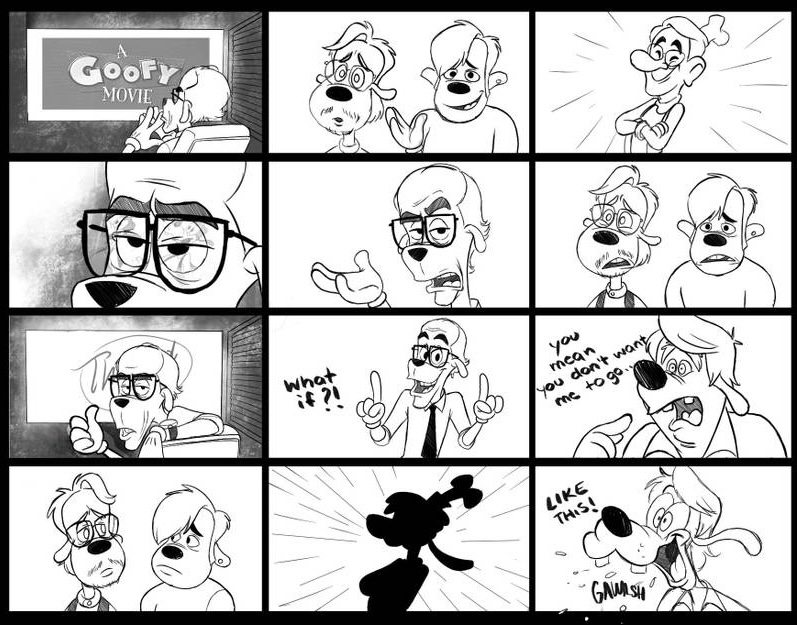
Not Just a Goof (Disney+). Feature documentary I produced from development through delivery, including key art, trailer, and brand campaign. Annie Award nominee, 100% Rotten Tomatoes. Watch the Film →
AI is a tool. The human owns the taste.
AI is three things in my workflow: a creative collaborator, a multiplier, and a production utility for unglamorous tasks. The human still owns the taste and the final call.
What AI won't replace is authorship. A story still needs someone deciding what it's about, who it's for, and why it matters. But the tools in this space are moving fast, they are nothing short of revolutionary, and the producers who adapt will define the stories of the next generation. From content creation to vibe coding to agentic workflows, I'm continuously learning, generating, drafting, and pushing the creative boundaries of what this tech can do to enhance my storytelling.
In practice, I treat AI as a tool that sharpens the work, not one that makes it. The pipeline runs end-to-end: scripting, generation, voice, editorial, and publishing, built once and refined continuously as the tools evolve. Every output gets a human pass. Every decision stays with the producer. The goal isn't more content. It's better stories, made faster.
"All art is dependent on technology because it's a human endeavour — even when you're using charcoal on a wall, that's technology."
— George LucasAI-native editorial video production. See the work →
Three seconds to earn the rest.
Film. TV. Vertical. Film gave us the long take, the wide shot, and the three-act structure. TV brought the cold open, the act break, and the episodic arc. And now vertical has its own language as well — with face-forward framing, three-second hooks, sound-off readability, and swipe-driven pacing. Most studios are still treating it as a place to repurpose film and TV clips. But with fast-changing economics, the rules aren't borrowed — they're being written right now.
Earlier in my career at Cornerstone, I produced DNA: Digital Native Advancement, the first vertical-first educational series built for Gen Z. Over 50 original lessons that respected the format and earned the scroll.
Now, I work in this medium daily. From news and politics to pop culture, science, and AI, I've built vertical pipelines that produce consistent content, with an average view duration of 64% on our top YouTube Shorts — a key signal in the platform's algorithm and a benchmark most editorial content doesn't hit. The first frame is the whole pitch; everything after has to earn the time.
"I would have written a shorter letter, but I did not have the time."
— Blaise Pascal, Lettres Provinciales (1657)DNA: Digital Native Advancement — vertical-first learning series produced for Gen Z at Cornerstone OnDemand. Learn More →
Build things that outlast you.
The work matters. The recognition matters. But what I most want to be true twenty years from now is that the people I worked with say I built them up to do great work.
A producer's job is to empower the creatives making the thing. The process is part of what gets built. That's the job.